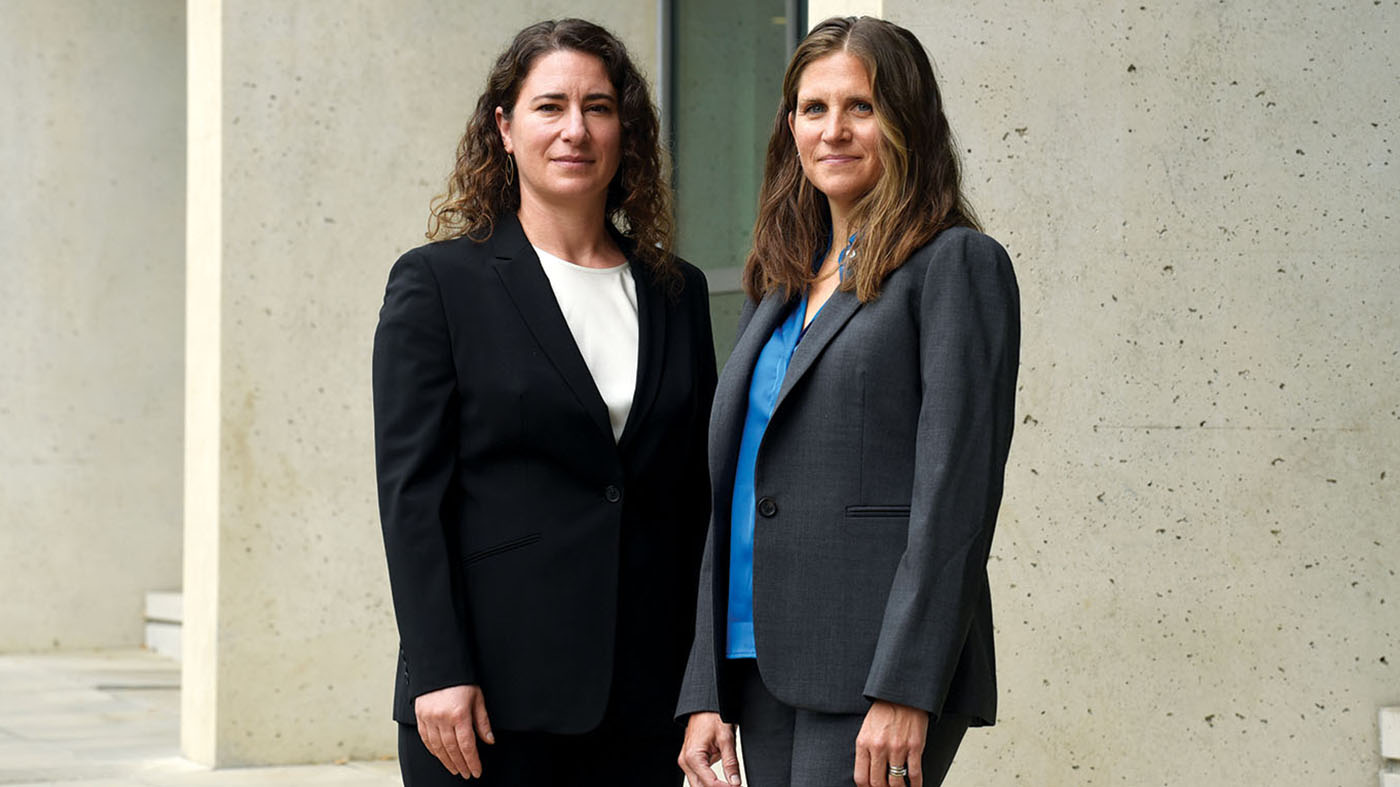
The Seattle University School of Law Center for Civil Rights and Critical Justice (CCRCJ) has submitted a letter to the Washington State Supreme Court urging it to reconsider the part of the Aug. 6 order that denies those who completed the bar exam the ability to elect admission by order. The letter is published in full below:
August 13, 2026
The Honorable Chief Justice Debra L. Stephens
Washington State Supreme Court
415 12th Avenue SW
Olympia, WA 98504
Via Electronic Mail
Re: Request to Reconsider Order No. 25700-B-753 (3), Excluding Accommodated Bar Examinees from Admission by Order
Dear Chief Justice Stephens, Associate Chief Justice Johnson, and Associate Justices of the Washington Supreme Court:
We write on behalf of the Center for Civil Rights and Critical Justice (Center) at Seattle University School of Law[1] regarding the Court’s recent order concerning administration of the July 2026 bar examination in Washington. We wish to applaud the Court for addressing the immensely challenging circumstances presented by the unsuccessful administration of the bar exam in July. In recognizing the need to offer admission by order, this Court has ensured that hundreds of future members of the Washington Bar will be ready and able to pursue their profession and work toward greater justice in our state.
However, the Center has significant concerns about the harm created by the order. On its face, this Court’s denial of relief to all applicants who were able to complete the exam may appear fair—but this category is comprised entirely of accommodated examinees and their exclusion from eligibility for admission by order fails to account for the significant accessibility barriers on the days of the exam.[2] The order is fundamentally inconsistent with this Court’s robust anti-discrimination jurisprudence that, when appropriate, examines impact rather than intent.
To document the severity of the accessibility barriers experienced by those who completed the exam, the Center circulated a survey soliciting responses from first-time accommodated bar examinees who completed the July 2026 exam. We are alarmed by their reports of the chaotic conditions under which the exam was administered, and the degree to which those conditions undermine the integrity of the results. The overwhelming majority of accommodated examinees who responded to our survey experienced a testing environment that was so compromised as to deny them an accessible exam.
We respectfully request that the Court reconsider the portion of its August 6, 2026, order denying relief to those who completed the exam[3] by amending paragraph 3 to permit this group to elect admission by order, as set forth at the conclusion of this letter.
Accommodated Examinees Experienced Significant Disruptions that Interfered with Access
According to the 2025 Law School Survey of Student Engagement, 1 in 5 law students report disabilities, the majority of which are linked to anxiety and ADHD.[4] Accounts provided to the Center through the survey describe a testing environment that would severely exacerbate those and other conditions, including: (1) repeated and disruptive technological failures (with both connectivity and the exam software itself), (2) reduced time; and (3) significant distractions and disruptions from other examinees, proctors, and IT staff.
We received survey responses from 57 first-time accommodated bar examinees. Of those who responded, 95% (54 total) reported experiencing disruptions during their exam, with more than half of respondents who experienced disruptions reporting more than five instances. Respondents reported various types of disruptions including: Wi-Fi connectivity (87%), proctor disruption (55%), disruptions by other examinees (55%), and submission problems (55%). Nearly half (44%) reported various other types of disruptions, including: delays impacting break times and overall time for exam completion, software/platform malfunctions resulting in loss of work, derogatory comments by proctors, and failure to honor gender-specific accommodations. While some tech support was available, 52% report it was not adequate.
Several test takers report that because of the disruptions, many of their approved accommodations, such as extended time to complete the exam, more regular breaks, and reduced distractions, were rendered meaningless.
“I took my medication when I normally would but we didn’t end up starting until quite a bit later than scheduled… by the time we did my medication was already wearing off and I had to decide between an uncertain dosage or operating a lower capacity. We were only able to start once the main room evacuated. While they were out of their room it was EXTREMELY loud and we could hear shouting and lots of talking. When we came back from lunch they told us that we would have to continue the exam offline and that they didn’t know whether our responses would save or not. The environment was SO distracting and I had wax earplugs AND muffs on. We had 15 people coming in and out of our room throughout and the seriousness of the testing environment was completely absent."
“The disruptions affected more than my schedule, they undermined the effectiveness of the accommodations that had been approved for me. Those accommodations exist to provide an equitable opportunity to demonstrate competence under standard testing conditions. Instead, the uncertainty, repeated interruptions, prolonged delays, and constantly changing environment exacerbated the very symptoms those accommodations were intended to address.”
“I am still feeling a fundamental lack of control regarding the exam and my ability to pass under conditions that did not meet the requirements of my approved accommodations. Feeling a lack of control independently triggers my PTSD under normal circumstances. Combining this situation with such a high stakes test, I feel almost as horrible as I did when I was having daily flashbacks.”
“The examination experience for those with accommodations was not the experience that was promised by the NCBE and the WSBA. Many accommodated test takers were placed in separate rooms due to learning disabilities or otherwise particular susceptibility to distractions. Yet, the exam administered was filled with constant distractions, noises, and disruptions. In addition, the lack of certainty as to whether the exam would continue caused great anxiety for examinees and were additional distractions.”
“I did not receive the full break time provided under my approved accommodations. Significant delays and technical issues substantially extended the testing day, but my lunch break was not extended to account for those delays. When examinees asked whether lunch could be lengthened given how late the testing day had become, a proctor responded, we don’t want to be here until 10:00 p.m. As a result, I was required to continue an already extended day without receiving the full break time contemplated by my approved accommodations.”
These reports necessarily raise concerns that the decision to exclude accommodated bar examinees from the option for admission by order will result in a discriminatory outcome for this group: they were not provided an accessible environment to best ensure that their exam results will reflect their readiness to practice law.[5]
The ADA Requires a Level Playing Field for Examinees with Disabilities
The Americans with Disabilities Act (ADA) requires that professional licensing exams, including state bar exams, be administered in in a manner that is accessible to individuals with disabilities, including by offering alternative accessible arrangements where necessary.[6] To ensure accessibility, examiners must administer the exam to individuals with disabilities in a manner that “best ensures” that “the examination results accurately reflect the individual’s aptitude or achievement level … rather than reflecting the individual’s impaired [ ] skills,”[7] assurance of which can be accomplished through modifications or accommodations to the exam or testing environment.[8]
These ADA requirements are designed to permit people with disabilities to access the bar exam on an equal basis with bar examinees who do not have disabilities. The “best ensure” standard required under the federal regulations is essential to establishing a level playing field under circumstances like the bar exam, “a one-time event wherein the accommodations either ensure equality or do not.”[9] Courts have recognized when examinees with disabilities are required to take a professional exam without the necessary accommodations “[their] ability to work through [their] disabilities rather than [their] knowledge of the subject matter of the test will be the aptitude tested.”[10]
Many accommodated bar examinees sought and were approved for accommodations that grant extended testing time, extended break time, elimination of distractions, and measures to decrease stress and anxiety. However, when connectivity issues arose, disruptions ensued, and additional accommodations were not offered to address the unforeseen circumstances, the accessibility of the exam environment was severely compromised. Based on our survey, most test-takers who qualified for accommodations did not adequately receive them, resulting in an effective denial of the accommodations WSBA had already approved.
The Court’s Order Denying Accommodated Examinees the Ability to Elect Admission by Order Risks Replicating Persistent Stigma Around Disability Accommodations
In addition to the failure to account for the actual testing circumstances that undermined equal access to the bar exam, the denial of relief to accommodated examinees risks replicating “the persistent stigma surrounding disability accommodations and the profession’s ongoing anxiety about perceived ‘special treatment.’”[11] Many accommodated bar examinees have lamented that this Court’s decision has essentially “outed” them—putting them in the untenable position of having to disclose their disability to friends, employers, and colleagues by admitting that they do not qualify for admission by order. The circumstances amount to a de facto violation of the confidentiality they were promised when they sought accommodations for the bar exam.[12]
“I had to continue testing while processing the short and long-term ramifications of being publicly outed like that for no reason. It was a gut punch to feel exposed [] and to know that my test would be graded by people who knew I had accommodations; that my job applications and interviews would be with employers who would know I had accommodations; that friends/family I had not disclosed my health issues to would now know I was accommodated; that many people believe accommodations are unfair advantages rather than equitable measures; and that my colleagues who did not have accommodations now knew I had them.”
“I have been and will be really harmed by the WSBA broadcasting my disability status which has been exacerbated 10 fold by the WA Supreme Court's order that provides no "cover" for me or other accommodated students.”
“I was forced to disclose to my employer about my accommodations. Before this I had a panic attack because the disclosure was really hard for me. I am a first generation woman of color and imposter syndrome is already very heavy. I never thought I would ever have to disclose this to anyone about my accommodations. Instead now I worry I might be discriminated by my disability. I thought this was all supposed to be confidential.”
“I value my privacy as an accommodated examinee because I have experienced discrimination for it before and prefer to keep it to myself to avoid the bias it seems to create against me. This situation essentially forces disclosure. Bias is inevitable, and I am concerned employers will now inevitably be aware of my disability. I worry that knowledge of my accommodations will impact their perception of me and the legitimacy not only of my score on the exam, but also my grades in school.”
The denial of admission by order to the accommodated examinees also fails to account for the significant barriers that exist in obtaining accommodations to begin with. WSBA's process for granting accommodations is extensive and requires significant and reliable documentation.[13] Each of the accommodated examinees satisfied these requirements and rightfully expected to have the benefits of their approved accommodations throughout the test. As explained by Professor Antonia Miceli, a leading disability scholar who writes about accommodations and professional licensure, obtaining accommodations “is a system of serial re-adjudication that treats stable impairments as perpetually suspect, compounding cost, delay, and attrition at precisely the moments when stakes are highest.”[14]
The denial of relief to this group also risks undermining diversity of the Washington bar and compromising quality representation for clients with disabilities. Discussing the fragmented systems of legal licensure—even under the NextGen UBE, which delegates accommodation decisions to each jurisdiction[15]—Professor Miceli notes that these barriers to obtaining accommodations “[p]erpetuate[] underrepresentation of lawyers with disabilities, creating representation gaps for clients with disabilities and depriving the profession of valuable talent and perspectives.”[16] The same can be said of the risk created by this Court’s order denying relief to the accommodated examinees.
This Court’s Commitment to Examining the Actual Impact of Laws Should Inform Its Reconsideration of Its Order Excluding Accommodated Applicants from Admission by Order
The Court’s categorical exclusion of those who completed the exam avoids the precise analysis this Court conducts in both litigation and rulemaking postures, when appropriate: an inquiry into actual impact.[17] This Court’s commitment to looking at the actual impact of how laws operate should inform its approach to reconsidering the relief available to the accommodated examinees—as a separate and distinct matter from the Court’s laudable intent to address an admittedly complex and terrible set of circumstances with care. As the survey demonstrates, nearly all respondents to the survey experienced a testing environment that was so compromised as to rise to the level of a denial of an accessible exam. The only logical conclusion is that the Court’s order will result in discriminatory outcomes.
The Center requests that this Court reconsider the portion of its August 6 order that excludes accommodated bar examinees who completed the exam from opting for admission by order. This result could be accomplished by amending paragraph 3 of the order as follows:[18]
- All first-time applicants who completed the July 2026 administration of the NextGen UBE in Yakima, Washington, are alsoineligible for waiver of the bar exam requirement and admission by court order. Applicants shall inform the WSBA in writing by email to admissions@wsba.org by Noon on August __, 2026, whether they are accepting an exam waiver or instead accepting theEexam results for these applicantsthat were submitted upon completion of the exam and for which the scoring process is underway. TheyThose who choose to accept their exam results will receive a NextGen UBE score, and are also not eligible to sit for the special September 2026 exam administration. Any of these applicants who do not achieve the minimum passing score on their exam will be eligible to sit for the February 2027 administration of the NextGen UBE in Washington without paying the WSBA application fee or NCBE exam fee. Applicants who apply for the February 2027 exam must comply with all other bar exam application deadlines and requirements.
This Court has led the nation with respect to equity, justice, and inclusion. Reconsideration of the Court’s order to recognize the discriminatory impact of excluding accommodated examinees from opting for admission by order will address the harm experienced by this group.
And granting the relief above will help the newest members of our profession take pride in this Court’s willingness to right past wrongs.[19]
Sincerely,
|
Professor Melissa Lee, Director Professor Jessica Levin, Director Professor Pilar Margarita Hernández Escontrías, Research Director Center for Civil Rights and Critical Justice |
[1] The views expressed in this letter do not represent the official views of Seattle University. Nor does the Center for Civil Rights and Critical Justice represent any individual or class of bar examinees.
[2] Sarah Merken, Tech Problems, Cancellation Mar New US Bar Exam for Some Test Takers, Reuters (July 29, 2026), https://www.reuters.com/legal/legalindustry/tech-problems-cancellation-mar-new-us-bar-exam-some-test-takers-2026-07-29/ (quoting WSBA chief communications officer, Sara Niegowski as saying “All applicants testing with approved accommodations were able to proceed with their exams as scheduled and were not impacted.”).
[3] Supreme Court of Washington, In the Matter of the Administration of the July 2026 National Conference of Bar Examiners’ NextGen Uniform Bar Examination in Washington State, Order No. 25700-B-753 at 3, ¶ 3 (Aug. 6, 2026).
[4] Karen Sloan, Reuters, One in Five US Law Students Reports Disabilities, Most Linked to Mental Health (Nov. 5, 2025), https://www.reuters.com/legal/legalindustry/one-five-us-law-students-reports-disabilities-most-linked-mental-health-2025-11-05/ (“Among the 20% of survey respondents with a disability, 57% reported having anxiety; 55% said they have attention-deficit/hyperactivity disorder; and 41% reported having depression.”).
[5]See 28 C.F.R. § 36.309(b)(1)(i).
[6] 42 U.S.C. §12189; see Bartlett v. New York State Bd. of L. Examiners, 970 F. Supp. 1094, 1128–29 (S.D.N.Y. 1997), aff'd in part, vacated in part on other grounds, 156 F.3d 321 (2d Cir. 1998), cert. granted, judgment vacated, 527 U.S. 1031, 119 S. Ct. 2388, 144 L. Ed. 2d 790 (1999), and aff'd in part, vacated in part, 226 F.3d 69 (2d Cir. 2000) (“Although Title III generally applies only to private entities, the examination provision has unanimously been held to apply to public entities, and specifically to state bar examinations.” (collecting cases)).
[7] 28 C.F.R. § 36.309(b)(1)(i).
[8]See 28 C.F.R. § 36.309(b).
[9]Jones v. Nat’l Conference of Bar Examiners, 801 F. Supp. 2d 270, 284 (D. Vt. 2011); Bartlett, 970 F. Supp. at 1121 (examinee is “not entitled to an accommodation which will ensure that she actually passes the bar examination. Rather, the accommodation is given so that she might be able to compete on a level playing field with other applicants taking the bar examination.”).
[10]Jones, 801 F. Supp. 2d at 286.
[11] Antonia A.B. Miceli, Accommodating Justice: The Fragmented Path to Legal Licensure for Students with Disabilities, 57 Univ. Mem. L. Rev. at *17 (forthcoming 2026), https://ssrn.com/abstract=6438298 (citing Nicole Buonocore Porter, Special Treatment Stigma After the ADA Amendments Act, 43 Pepp. L. Rev. 233, 254 (2016) (developing the concept of “special treatment stigma” and explaining how fears of unfair advantage shape accommodation decision-making)).
[12] The WSBA website assures bar applicants that their requests for accommodations will not be made public. Washington State Bar Association, Testing Accommodations, Online Admissions (2026), https://admissions.wsba.org/testing-accom (“Confidentiality of Testing Accommodation Requests: In accordance with APR 1(d), all testing accommodations requests and supporting documentation are confidential. This information is used to evaluate and determine appropriate modifications to standard testing procedures.”).
[13]See Washington State Bar Assoc., Admissions Policies of the Washington State Bar Association 8 (May 2026), https://admissions.wsba.org/getpdfform.action?id=2080 (describing process for requesting disability accommodations for bar exams, including submitting request at least 80 days before the exam and providing supporting documentation, after which the WSBA reserves the right to have the documentation reviewed by a specialist); see also Washington State Bar Association, Testing Accommodations, Online Admissions (2026), https://admissions.wsba.org/testing-accom (linking to optional detailed forms to certify accommodations history and proof of disability and need for accommodations from a qualified professional).
[14] Miceli, supra n. 11, at *17.
[15]Id. at *32.
[16]Id. at *5; see also id. at 41 (discussing underrepresentation of members of ABA with self-reported disability and noting that when representation lags behind prevalence, “the costs are immediate: fewer culturally competent advocates for high-incidence problems, diminished trust with affected client communities, and lost organizational performance gains that inclusive teams reliably deliver.”).
[17]State v. Bagby, 200 Wn.2d 777, 792-93 (2023) (“We are concerned with the impact of racial bias—not a person's intent.”); see generally GR 37; State v. Sum, 199 Wn.2d 627 (2022); State v. Gregory, 192 Wn.2d 1 (2018).
[18] While this proposed amendment is the most important to accomplish the stated goals, there may be other necessary edits to the order to ensure consistency, which are not included here.
[19] E.g., Letter from the Wash. State Supreme Court to the Members of the Judiciary and the Legal Cmty (June 4, 2020) (addressing racial injustice); Order, State v. Towesnutte, No. 13083-3, at *4 (July 10, 2020) (“We cannot forget our own history, and we cannot change it. We can, however, forge a new path forward, committing to justice as we do so.”); Garfield Cnty. Transportation Auth. v. State, 196 Wn.2d 378, 390 n.1, 473 P.3d 1205 (2020) (overruling as incorrect and harmful the decision in Price v. Evergreen Cemetery Co. of Seattle, 57 Wn.2d 352, 357 P.2d 702 (1960)).